Accounting themochatechnologies•May 22, 2026
Automobile billing software: Simplify invoicing and inventory management
themochatechnologies•May 22, 2026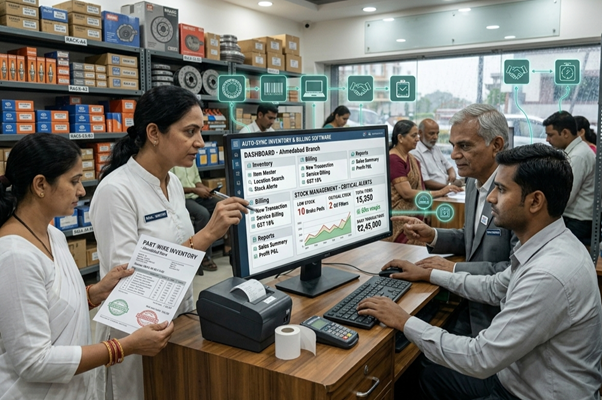 themochatechnologies•May 22, 2026
The automobile industry in India is massive, clocking in a turnover of Rs. 20 lakh crore in FY2024-25, according to data released by the government. However, running an automobile business is a complex operation that requires not just technical know-how but also operational excellence, real-time stock tracking, and financial management. Most automotive businesses start small and manage their finances using physical registers or spreadsheets. However, as the business scales, managing the finances of an automobile business in this manner becomes infeasible.
Here’s where automobile billing software makes a big difference. It brings sales, tax work, stock records, purchase entries, and automotive financial reporting into one digital system. For Indian auto businesses, this means faster billing, better stock visibility, easier GST work, and a much stronger grip on daily operations. It also gives managers and accounts teams a fuller view of which parts sell fast, which jobs earn more, and which items need fresh purchase planning. In this article, you will see how automobile billing software speeds up invoicing, and why inventory control sits at the heart of a profitable auto business. You will also learn how signing up for auto-accounting tools, such as Mocha Accounting, can add tremendous structure to your automotive business and unlock its growth potential.
Automobile billing software is a digital system built for the daily needs of garages, workshops, spare parts dealers, service centres, tyre shops, and battery sellers. It brings together billing, GST, stock levels, purchase records, labour charges, and sales reporting in one place. This is very different from a basic billing tool that only creates an invoice and stores a sales total.
An automobile business handles a large number of small parts, such as gaskets, bulbs, and spark plugs, often from multiple brands. In addition, the workshop may charge for labour performed, such as wheel balancing, alignment work, oil changes, or other repair jobs. A generic billing tool often fails to address these needs, affecting workshop billing efficiency. Here’s a comparison between the functionality of a basic billing tool and specialised automobile billing software:
| Business need | Basic billing tool | Automobile billing software |
| Spare parts tracking | Limited item handling | Tracks thousands of parts with SKU records |
| GST billing | Basic invoice creation | GST-ready invoices with HSN Codes |
| Labour charges | Often handled as a simple line item | Links labour with job-wise billing |
| Stock update | Manual stock change | Stock reduces during billing |
| Multi-brand stock | Hard to manage at scale | Handles many brands and item categories |
| Service records | Little or no vehicle history | Keeps job-wise and customer-wise billing records |
| Purchase records | Limited control | Tracks purchase orders, bills, and supplier dues |
Invoicing shapes the customer experience in the automotive industry. The list below shows how software makes day-to-day billing easier.
Inventory control sits at the centre of every successful automobile business. Even the best billing desk will struggle if the garage inventory control is poorly managed. Automobile billing software solves this problem by connecting stock records with sales billing. When a bill is created, the stock count is updated immediately. This gives the business a live view of what is available, what is moving quickly, and what needs a fresh purchase plan.
The table below shows how strong stock control changes daily workflows in an auto business:
| Inventory task | Manual method | Software-based method |
| Stock deduction after sale | Staff will update the stock register later | Stock reduces during billing |
| Fast-selling item review | Manual stock counting | Dashboard shows fast-moving parts |
| Reorder planning | Based on memory or a rough guess | Low stock alerts show a purchase is needed |
| Multi-location stock view | Separate registers by branch | One view across the branch or warehouse |
| Brand-wise stock review | Hard to manage with many products | Item-wise and brand-wise stock records |
Low stock alerts are especially useful for auto businesses. A fast-moving item such as engine oil, air filters, brake fluid, bulbs, or spark plugs can run out quickly. When the software alerts the team early, the business can place a purchase order before the item is out of stock.
A robust automotive billing system should do more than just print invoices. It should help the business grow through better control over jobs, stock, supplier payments, and reporting. That is where the right feature set becomes very important.
The numbered list below highlights the features that bring the most value to an automobile business. This format also makes it easy to review the must-have functions before choosing software.

These features give business heads, counter staff, store teams, and accounts teams one common system that improves control across the business. To explore the complete suite of features that Mocha Accounting offers, have a look at the tiered pricing plans before zeroing in on the plan that works best for your auto business.
Profit in the automobile trade depends on many small actions done well every day. However, manual billing creates several small risks. Staff may type the wrong item code. A discount may be entered twice. Stock may be issued from the shelf without a matching bill. Labour charges may be forgotten in the final invoice. None of these issues looks large in a single case, yet over a month or a year, they can drain a large amount of money from the business. Here’s why speed and correct records have such a strong effect on the bottom line:
Customer retention also links closely with billing speed. A customer who receives a quick bill, a polished invoice, and a proper item list is more likely to return for the next service or part purchase. Speed signals professionalism. It also reduces frustration during busy periods.
Many automobile businesses still run on habit and instinct. However, as the business scales up, it needs stronger numbers. Data-driven reports improve decision-making quality. Here’s how reports and data-driven insights add value to auto businesses:
| Business question | Data from the software | Benefit for the business |
| Which parts sell fastest? | Item-wise sales report | Better stock planning |
| Which services earn more? | Service and labour reports | Better pricing and focus |
| Which items move slowly? | Slow stock report | Lower excess stock |
| Which supplier gives better value? | Purchase and payment records | Better buying decisions |
| When does repair demand rise? | Monthly sales patterns | Better seasonal planning |
| Which branch sells more of a brand? | Location-wise stock and sales report | Better stock movement between branches |
This kind of visibility becomes very useful before seasonal spikes. For example, tyre demand can rise before monsoon travel, battery checks may increase during weather shifts, and oil service demand may jump before holiday periods. When the business has past sales data and stock movement reports, purchase planning becomes much stronger. Mocha Accounting gives dashboards and business reports that help managers move from gut-based decisions to number-based reviews. For a growing spare parts store or workshop, this shift is very important. It changes the business from reactive working to planned working.
Automobile billing software gives Indian workshops, spare parts stores, and service centres a much stronger way to handle invoicing and inventory. It speeds up the billing desk, keeps stock records in step with sales, improves GST billing, and gives managers better reports for daily business control.
For auto businesses that want to grow, automobile billing software is the system that connects all the elements of the business, streamlining workflows to generate business value. To understand how software like Mocha Accounting can add value to your auto business, schedule a demo today!
Automobile billing software generates GST-ready invoices, applies tax rates during billing, and records sales in a format that supports tax filing. It also stores item details and HSN Codes in a more organised way.
Yes. Automobile billing software usually features spare parts management systems that can track multiple brands, categories, SKUs, and item variants. This is very useful for stores that stock a large range of parts.
Yes. Cloud-based auto billing systems keep data on secure servers and give controlled access to users. They also help businesses view records from different devices and locations without having to carry files or local backups.


